
Competition
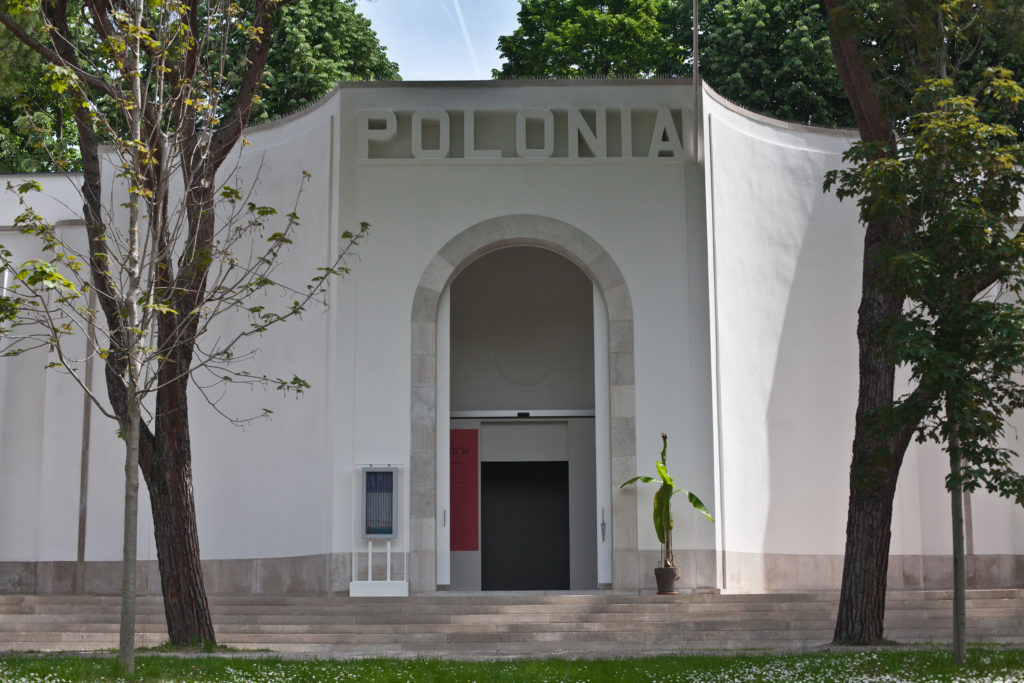
Results of the first stage of the competition for a curatorial exhibition project at the Polish Pavilion for the 20th International Architecture Exhibition in Venice in 2027
On August 31, 2026, at Zachęta—National Gallery of Art, the jury gathered for the first stage of the competition for an exhibition project at the Polish Pavilion for the 20th International Architecture Exhibition in Venice in 2027. The jurors, appointed by Marta Cienkowska, Minister of Culture and National Heritage, reviewed 48 proposals and selected 8 entries for the second stage of the competition, identified by the following codes:
- 220960
- TACO20
- 151617
- 3638
- OIOM
- 262026W
- DZIEŃDOBRY666
- 5091
In accordance with the competition rules, the authors of the above entries are asked to submit the documents required for stage II. The deadline for submitting the documents is October 1st, 2026.
Competition announcement
The Minister of Culture and National Heritage and Zachęta — National Gallery of Art are announcing a competition for a curatorial exhibition project for the Polish Pavilion to be presented at the 20th International Architecture Exhibition in Venice in 2026.
The competition is open and made up of two stages.
For the first stage, please submit:
- the general concept of the exhibition, stating the main theme,
- an overall visualisation of the exhibition
- an overall cost estimate of the exhibition.
In the competition procedure, the first and last name of the curator (or curator team) is concealed in both stages (I and II). The competition documentation may provide the names of the artists/architects to be presented in the exhibition.
The deadline for submitting projects for stage I is 28th August 2026.
By this date the proposals must arrive at the organiser’s address, at:
Zachęta — National Gallery of Art
Pl. Małachowskiego 3
00-916 Warsaw
in an envelope marked ‘Biennale Architektury 2027’
The planned date for publishing the results of stage I is: 1st September 20256
The labiennale.art.pl web site will announce the emblems of the teams that qualify for stage II. The project designers should supply the documentation for stage II by 1st October 2026. As the applicants’ names are concealed, the organiser will not be reaching out to participants to submit these documents.
The competition’s Jury:
- Michał Duda – director of Museum of Architecture in Wroclaw, architecture historian
- Donata Jaworska – director of the Department for National Institutions of Culture (representative of the Ministry of Culture and National Heritage of the Republic of Poland)
- Aleksandra Kędziorek – art and architecture historian, contemporary architecture researcher
- Michał Krasucki – art historian, acting director of National Institute of Cultural Heritage
- Maciej Kuryłowicz – representative of Association of Polish Architects, architect, First Vice President of Association of Polish Architects
- Marcin Kwietowicz – architect, designer of the expositions in the Polish Pavilion in 2005 and 2026
- Grzegorz Piątek – architect, critic, architecture historian
- Agnieszka Pindera – curator, art theorist, director of Zachęta – National Gallery of Art, commissioner of the Polish Pavilion in Venice
- Ewa Porębska – architect, architecture critic, exhibition curator
- Dorota Leśniak-Rychlak – architect, art historian, editor-in-chief of ‘Autoportret’ magazine
- Bolesław Stelmach – architect, acting director of The National Institute of Architecture and Urban Planning
- Małgorzata Tomczak – architecture critic, editor-in-chief of ‘Architektura & Biznes’ magazine
- Olga Wysocka – cultural manager, political scientist, director of Adam Mickiewicz Institute
Full conditions and rules of participation in the competition are to be found in the competition regulations.
Downloads:
—competition regulations (in Polish) [pdf] [.docx]
— floor plan of the Polish Pavilion [zip]
Additional information about the competition:
Michał Kubiak m.kubiak@zacheta.art.pl; Anna Kowalska a.kowalska@zacheta.art.pl
20th International Architecture Exhibition — La Biennale di Venezia
8 May–21 November 2027
more about the Architecture Biennale 2027
Explaining their choice Wang Shu and Lu Wenyu said: «All these questions point to one essential path: facing real reality and local practice, and directly “do architecture”, especially a kind of “do” that is grounded in bodily touch. It is precisely through this concrete act of “do” that things which seem impossible to bring together can gather in one place. This is the theme we propose for the Biennale Architettura 2027: Do Architecture —For the Possibility of Coexistence Facing a Real Reality».
«In the face of global climate change, can active and passive approaches to design, strategy, and technology work alongside one another? Can land and architecture coexist? Can more natural materials and local craftsmanship overcome conceptual and technical barriers to stand alongside modern design and construction as their primary components? Can memory and innovation coexist dialectically? Can the efficiency of modern design and construction coexist with slower, more meaningful forms of craftsmanship? Can we resolve the conflict between urban and rural models of development? Is there a way for them to coexist while preserving the vulnerable character of rural areas?»
«We believe that architecture is not only something to be discussed but, more importantly, something to be done first-hand. The philosophy of architecture is a philosophy of how to do: a practice that confronts real reality, in real places, through real construction».
«We believe that architecture as an effort to protect local cultural heritage can coexist with architecture as an avant-garde force for social transformation. Only in this way can architecture preserve its value in an age flooded by technology. Only in this way can humanity, through architecture, preserve a tangible value. Only through continuous struggle can hope be kept alive».